
Thursday, July 22nd 2016
Rainy Days start best with Matcha and Sushi
We are visiting Japan during the rainy summer season, which means the weather is hot and humid, mostly around 74 degrees (~ 32° C), so we really enjoy the slight rain showers during the day and the cooling air afterwards. The place we stay is located in Hibarigaoka, a quiet neighborhood in the western outskirts of Tokyo, called Nishi-Tokyo (Nishi = West). We are living with Yuka and Masato, a Japanese couple, who recently traveled the world. Some serious health issues made them think about life, therefore they decided to move on differently and started to experience the world. They have been visiting more than 50 countries during the last 2 years. They just returned home with a suitcase full of memories to share. I can’t believe how welcoming, open-minded and helpful they are. Before entering the house, you have to take off your shoes. The living room offers a Tatami mat and we are placed on a Japanese-style futon, which is easy to roll out. We keep it with the Japanese: Most simple’s best – at least when it comes to traditional housing. Fashion, IT, Cars, … wouldn’t apply so much for simplicity. Tokyo inhabits a bunch of fashionable Harajuki-Girls, loads of Manga-Fans around Shibuya and myriads of Tech-Nerds gathering at Akibahara. “Akiba”, as they call it, is a huge Tech-Universe where Sony and Panasonic present all their crazy stuff months before they put it on retail or sale. We might go there during our trip. Not sure yet, though.
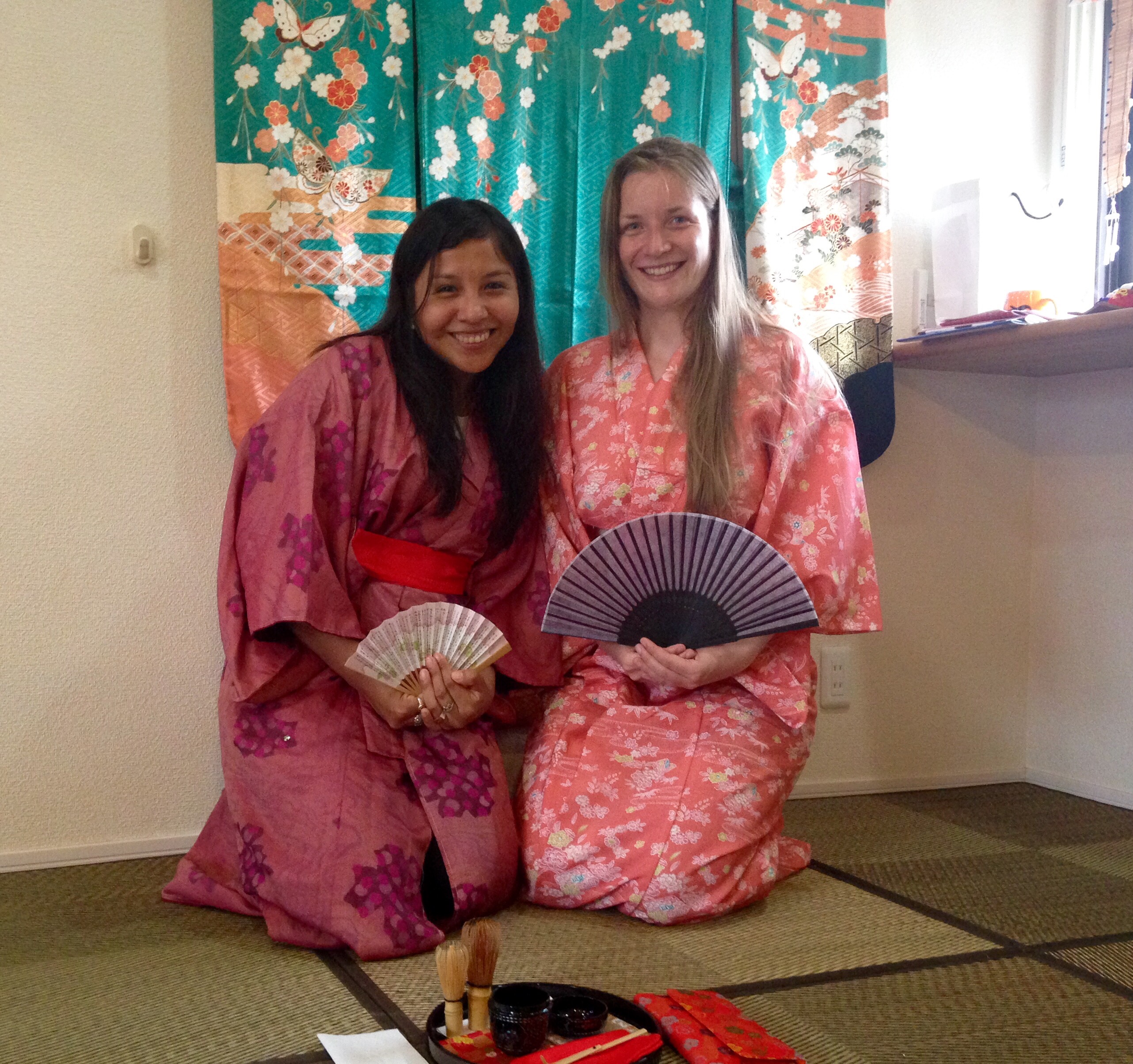
From the very first time I stepped into Yuka’s and Masato’s apartment, I felt kind of home. What a cozy space in a truly respectful, warm-hearted atmosphere. Yuka’s grandma, now 93 years old, sewed a lot of Kimonos in her life. Yuka stores and displays them at home and we were honored to wear them once. There are light fabrics for hot summers and warm kimonos for the cold winter time.
Matcha Tea Ceremony
Could you possibly start off your day better than wearing a comfy kimono and celebrating a cup of freshly made Matcha? Matcha is the green tea powder you whisk up after adding water until you get a frothy mixture. Don’t forget to spin the Matcha bowl twice to the left in respect of the others sitting with you. Yuka told us that every tea bowl shows a “face” painted on the bowl which you should turn towards the others to avoid “eyes in someone’s back”. You hold your Matcha bowl with both of your hands and sip it slowly. It’s meant to be very polite to keep the foam until the end.


The Eats in Nishi-Tokyo
After tea, we strolled through the rainy streets of Hibarigaoka with our lovely hosts. I am surprised how often trains are rushing by; we have to stop quite often at the gated railroad crossings and it feels like trains are ready for take-off; I mean they are almost flying.
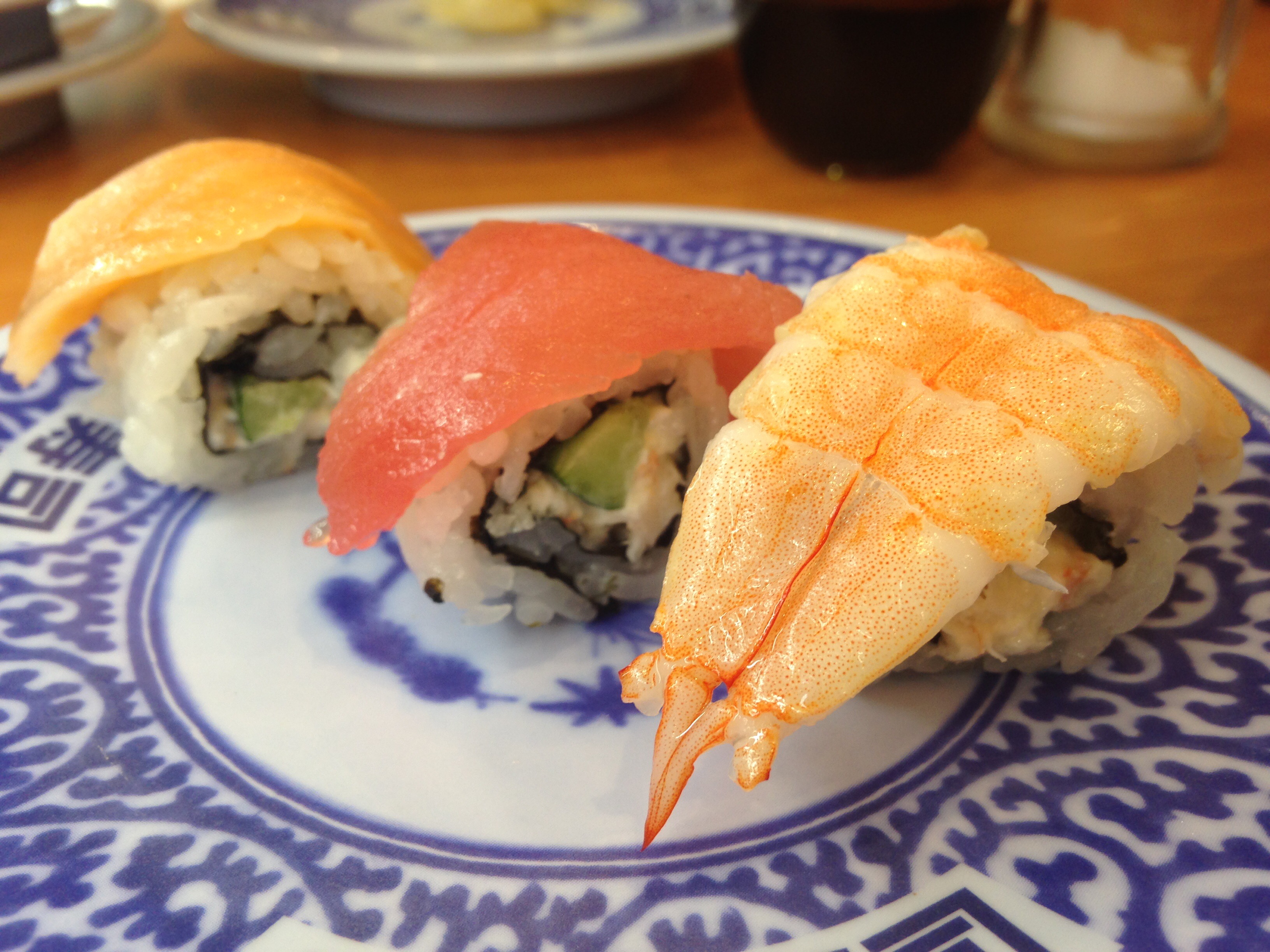
Yuka and Masato took us to a “running Sushi” place, the one with a conveyer’s belt; this one served Sushi after ordering via iPad. Once you chose a table, you sit there and check the menu on the iPad right by the table. You click “+” or “-“ to add or reduce a dish you want. Every plate is 100 Yen (which is currently 0,80 Eur) and you can also grab a plate from the belt. The dish is ready in less than 2 minutes and flys in like the trains would rush through outside. I can feel that Yuka and Masato are very curious about cultural habits in Germany, but they don’t insist asking. It is a very smooth conversation, we all exchange our viewpoints, opinions and questions in a very familiar atmosphere. It seems we are very lucky having this sociable couple as our hosts. They both see a lot of cultural related things in a critical way, but they perfectly make use of their surroundings. They find it most convenient to order via iPad or in front of a restaurant by clicking the preferred dish(es) on a vending machine and immediately pay there. Afterwards you enter the restaurant and the financial part is all gone. No personal interaction needed, the menu comes from a conveyer’s belt.
We exchanged our thoughts in order to learn about similarities and differences; for instance, when facing the structure of our mother tongues (German, Spanish, English and Japanese), discussing the history of our countries, questioning the political systems and most prominently, talking about the way we wish to live and the contradictory, stony ground we walk on to reach our aims. We have been talking a lot about cultural ties and values though.
 Rivers and Roads